
Programming teaches you to see the system
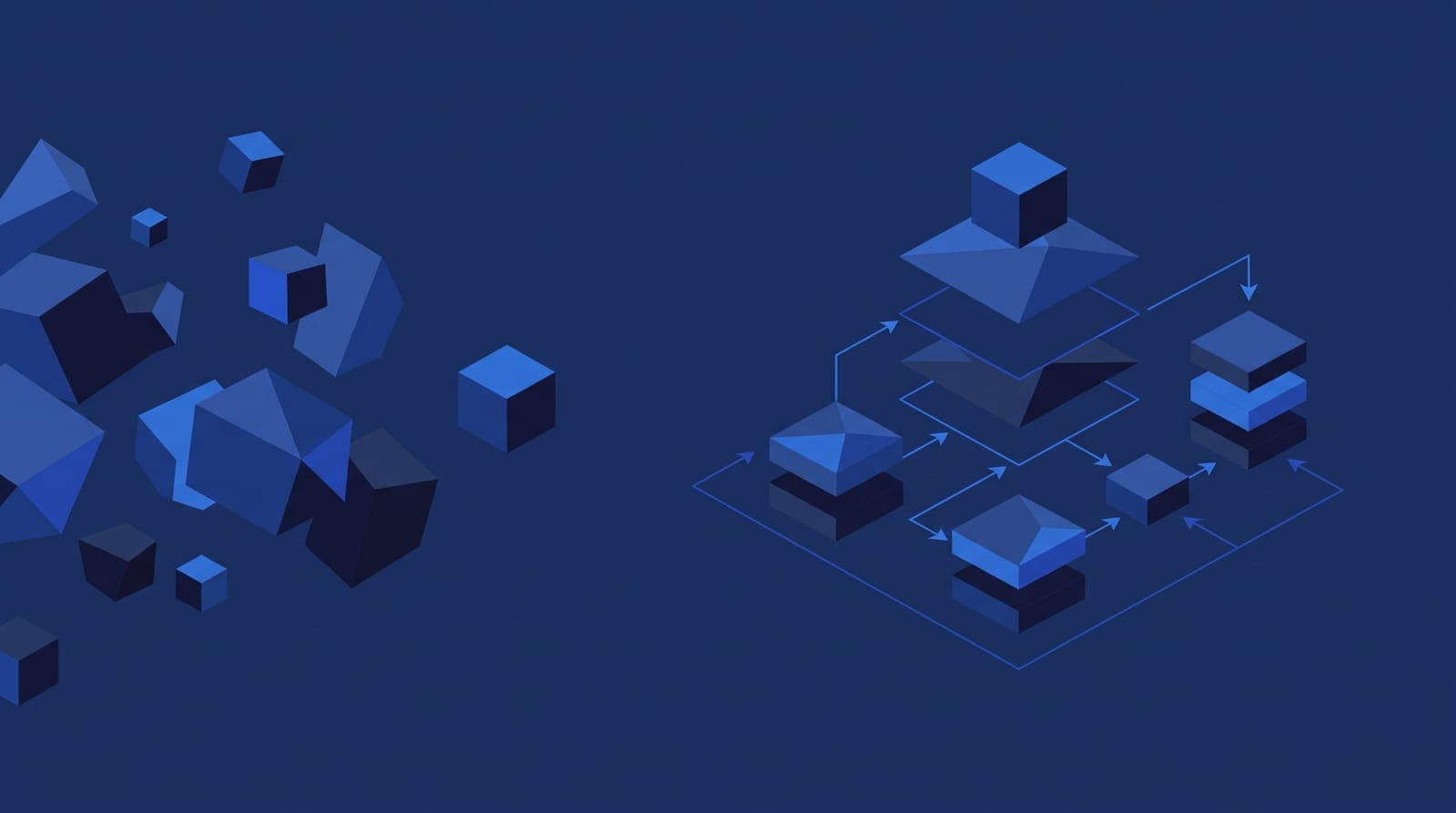
Most people think programming is about writing code. It is not. Code is the residue. The real skill is building a clear mental model of abstract things and how they talk to each other.
After years of doing it, I am convinced this is the most underrated thinking tool we have. Not for software. For everything else.
You cannot pitch a function
Software has no room for a story. You cannot persuade a compiler. You cannot charm a database into returning the right rows. The interface either holds or it does not, and the machine tells you which within seconds.
That forces a very specific discipline. Every piece needs a name. Every piece needs a single, clear responsibility. And for every piece you have to define exactly what it receives, what it returns, and what happens when the input is wrong.
Do that long enough and it stops being a technique. It becomes the way you see. You walk into a situation and you start drawing boxes and arrows in your head before anyone has finished talking.
The same shapes are everywhere
Once you see systems this way, you notice that most human structures are software that nobody bothered to specify.
- Governance. A policy is an interface. Who is allowed to call it, what inputs it accepts, what it guarantees in return. Most governance failures are what programmers call undefined behavior: a case nobody wrote down, so everyone improvises and everyone improvises differently.
- Hierarchy. An org chart is an architecture diagram. Each department is a module. When two teams have to reach into each other's internals just to get something done, that is tight coupling, and every change in one breaks something in the other. A good manager is an abstraction layer, not a bottleneck that re-implements everything underneath.
- Building solutions. Before anyone debates the answer, you agree on the shape of the problem. Inputs, outputs, constraints, edge cases, failure modes. Half of the arguments I see in boardrooms are two people solving different problems and not knowing it.
Why programming, specifically
Mathematics teaches abstraction. So does law. But programming has something neither of them gives you as quickly: a feedback loop that is brutally fast and completely indifferent to who you are.
It compiles or it does not. The test passes or it fails. There is no seniority in a stack trace, no bonus points for a confident tone, no credit for how well you framed it. I wrote about this culture before in the call-your-bluff culture in science and engineering. Programming is where most of us get our first, daily dose of it.
What it trains is simple to say and hard to learn any other way: clarity is not a style choice. It is the thing that makes a system work. Narrative, messaging and charisma do not move the needle. Only the model being right does.
Bringing it back into the room
You do not need to write code to use this. Next time you are in a meeting about a reorganization, a new policy, or a project that is going sideways, try asking the questions a programmer would ask:
- What are the components here, and what is each one responsible for?
- What does each one need from the others, and what does it hand back?
- Where is the single source of truth?
- What happens when an input is missing, late, or wrong?
- If we removed this piece entirely, what would actually break?
That last question is my favorite. It is remarkable how often the honest answer is nothing.
Strip the story, then put it back
People are not functions, and I am not suggesting we treat them like ones. Stories matter. They motivate, they align, they carry meaning that no diagram can.
But when you are designing, deciding or diagnosing, the story gets in the way. So strip it first. Look at the bare model: the pieces, the responsibilities, the connections, the failure points. Get that right. Then put the story back on top of something that actually works.
That is what programming gave me, and it is the part of the craft I would teach to everyone, whether or not they ever write a line of code.
So the next time a discussion drifts into narrative, pick up a pen. Draw the boxes. Draw the arrows. And ask what each one is actually supposed to do.